The Story of Creation in the Middle Ages at Getty
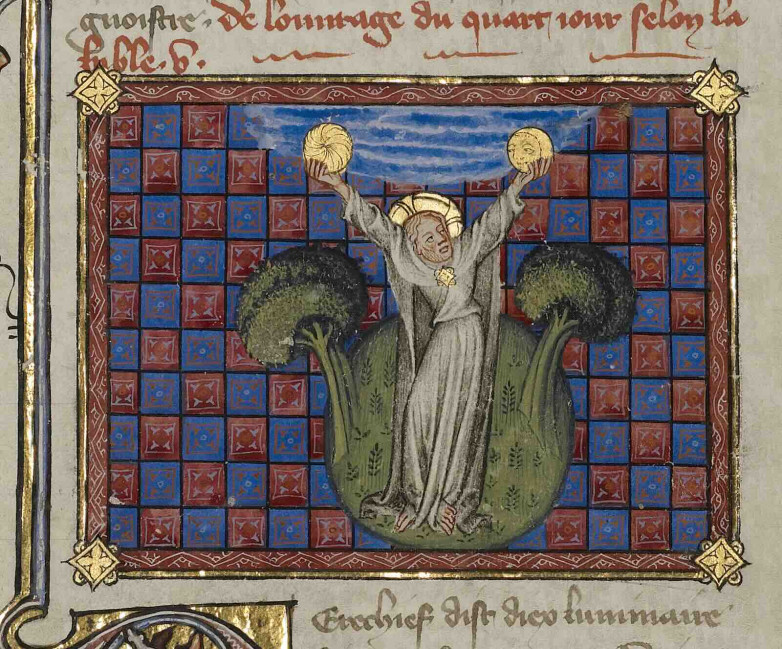
The Creation of the Sun and the Moon (detail) from the Historical Bible, about 1360 –70, Master of Jean de Mandeville (French, active 1350–70). Tempera colors, gold, and ink on parchment.



The J. Paul Getty Museum will open its Beginnings: The Story of Creation in the Middle Ages exhibition next month exploring how the Biblical story of Creation was visualized and interpreted in the Middle Ages and today.
On view at the Getty Center from January 27 through April 19, 2026, the exhibition features 15 manuscripts from the Getty Museum’s collection alongside four contemporary paintings by LA-based artist Harmonia Rosales.
The exhibition's themes include Visualizing the Creation, Creation in the Abrahamic Faiths, The Introduction of Evil, and Beginnings and Ends, plus a special section devoted to Adam and Eve that will explore the creation story of the first humans and how its iconic imagery encoded complex ideas about gender roles and human behavior.
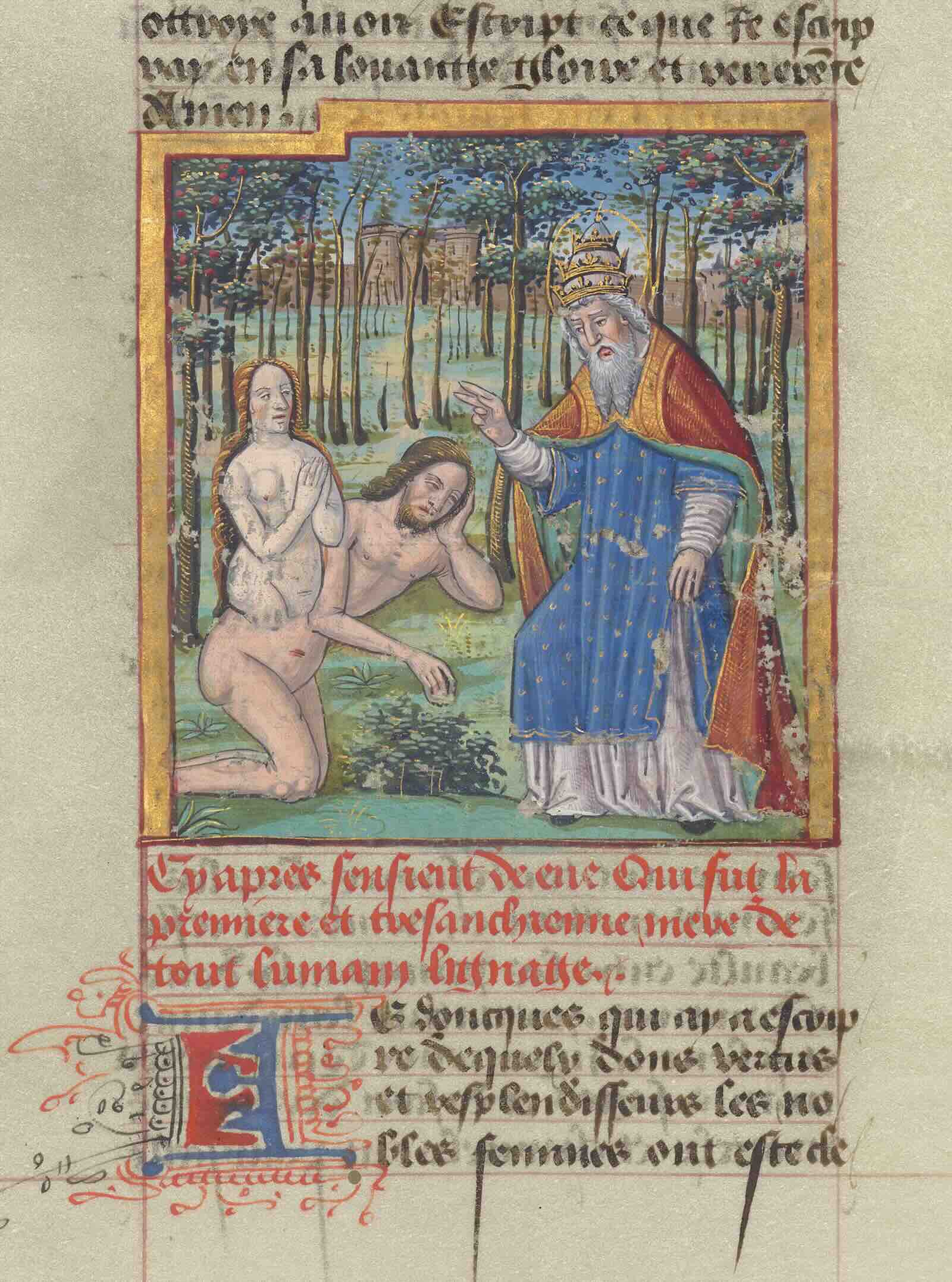
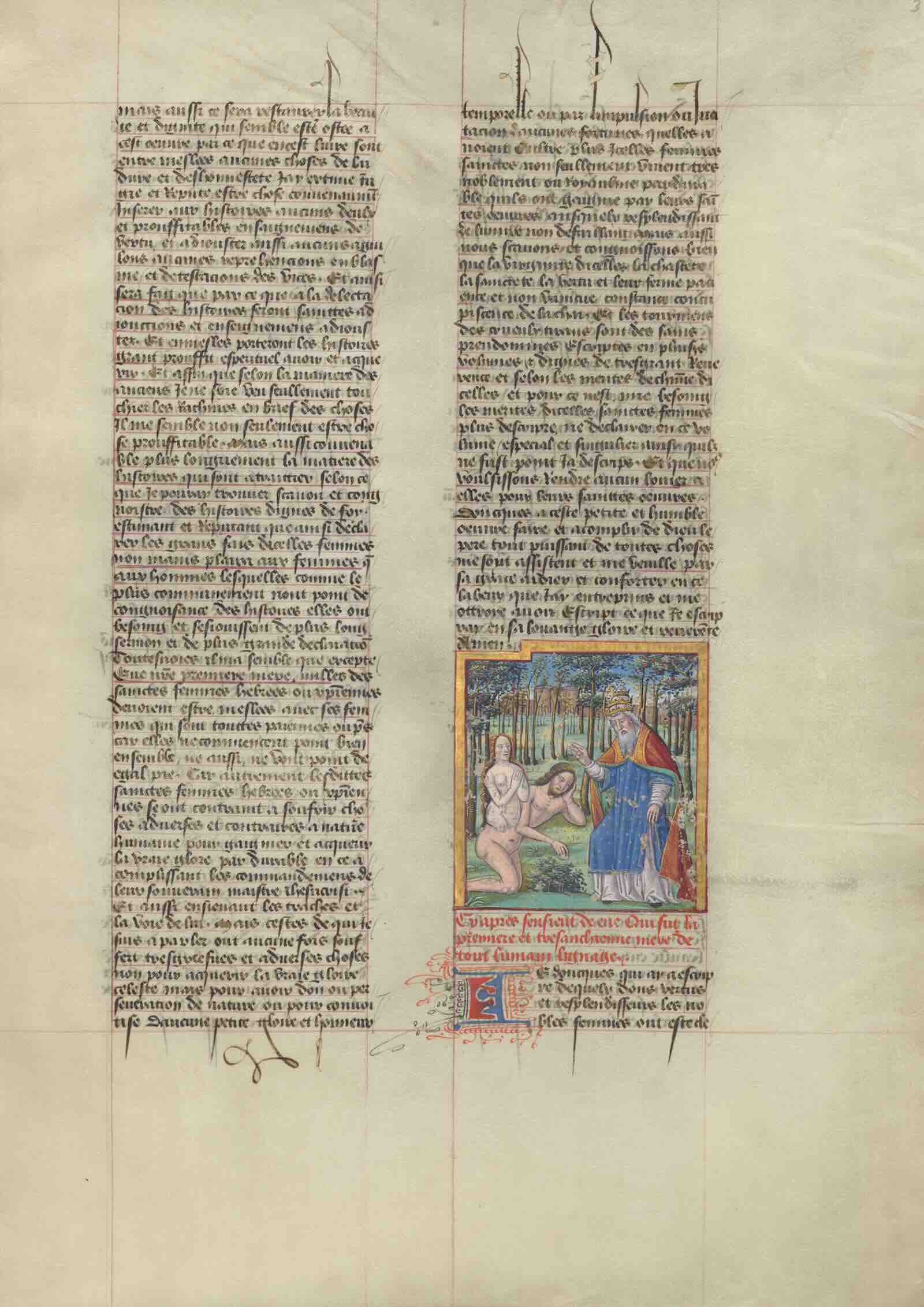
Eve’s role in the Creation story cemented the medieval concept of feminine weakness and generated some of the most recognizable medieval images that display sociocultural beliefs about gender. Highlights include:
- a recently acquired manuscript where the 16th century artist Étienne Colaud depicts God creating Eve from Adam’s rib
- The Creation of the Sun and the Moon from the Historical Bible produced by Master of Jean de Mandeville about 1360 – 70
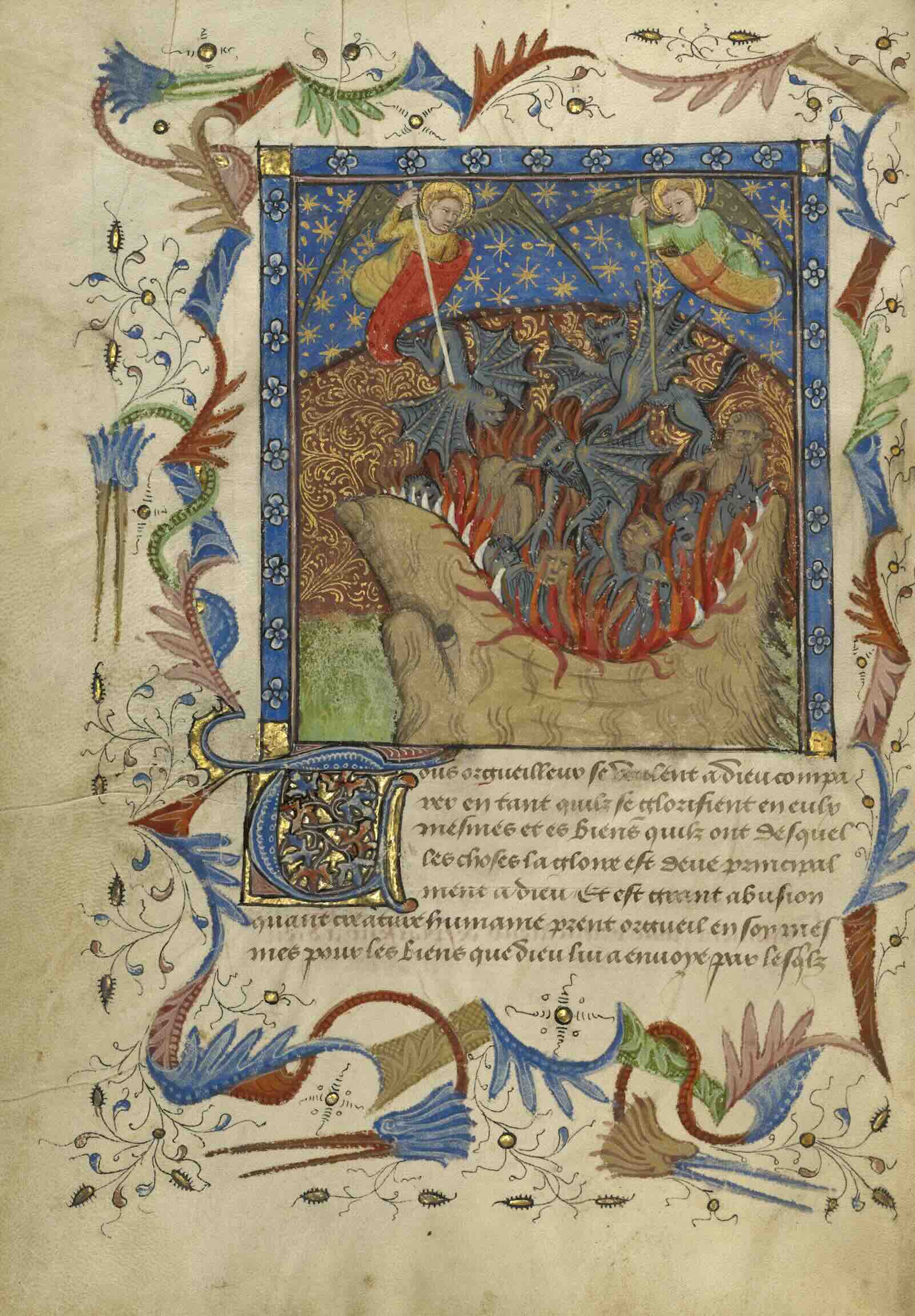
- The Fall of the Rebel Angels from Book of Good Manners, about 1430
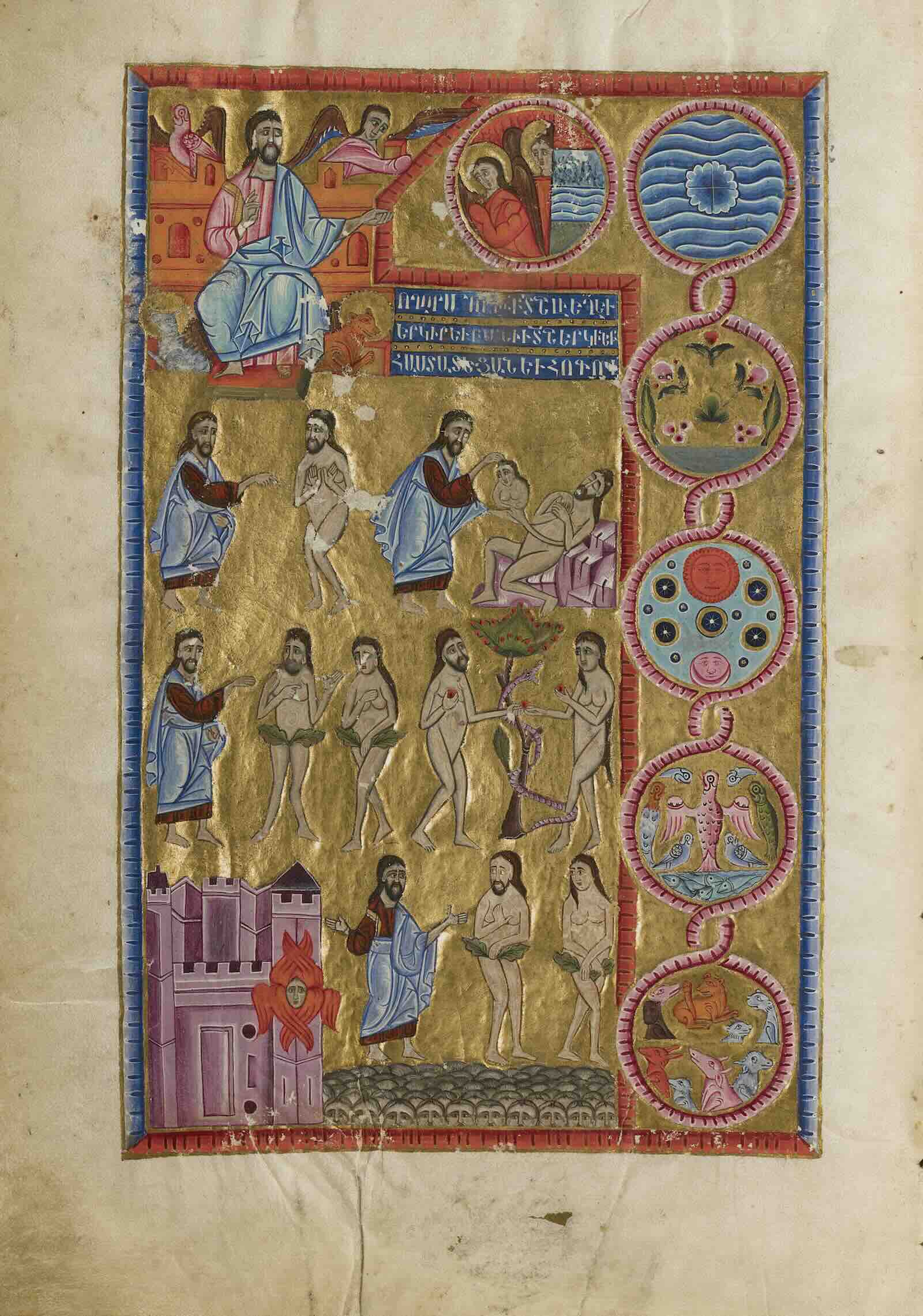
- pages from the Rothschild Pentateuch
“The biblical story of Creation formed the basis of how medieval Christians viewed the world and continues to exert a strong influence on many artists today, seeing it both as an etiological origin story and as a metaphor for the human condition,” said Timothy Potts, Maria Hummer-Tuttle and Robert Tuttle Director of the Getty Museum. “Alongside contemporary works by Harmonia Rosales, the Museum objects in the exhibition explore traditional and divergent interpretations of Creation, challenging and reframing medieval works of art in the process.”