News | October 15, 2025

Rare Books and Photographs Tell Story of Middle Eastern and North African Immigration to New York
New York Public Library

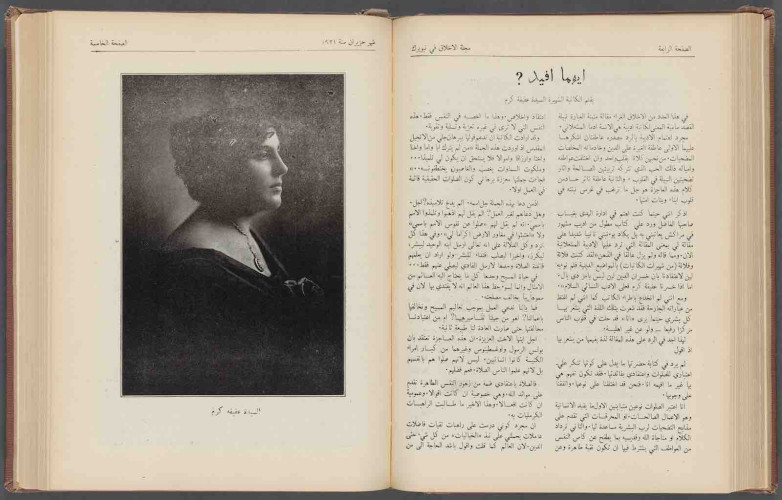
Afīfa Karam (1883–1924), the first Lebanese American female journalist, prolific novelist and translator who contributed regularly to Arabic serial publications including al-Akhlāq (Character) (New York, June 1921, The Syrian-American Press: Ya‘qūb Rūfā’īl)


Niyū Yūrk at the New York Public Library explores the history of Middle Eastern and North African immigration to New York City from the first waves in the late 19th century through to the present day.

The exhibition examines how New York City has shaped MENA communities as well as their contributions to the city’s cultural landscape from Yemeni bodegas in Brooklyn to Arab nightclubs along Eighth Avenue through Arab American newspapers, rare books, photographs, music recordings, and film clips.

“This exhibition is a wonderful chance to celebrate the vibrant contributions of Middle Eastern and North African communities that have long shaped New York City,” said Hiba Abid, Curator for Middle Eastern and Islamic Studies.

Highlights include: 

  • a rare first-person account from 1895 detailing the immigration experience titled A Stranger in the West by Mīkhāʼīl As‘ad Rustum al-Shuwayrī who is believed to be the first Arab poet to immigrate to the United States
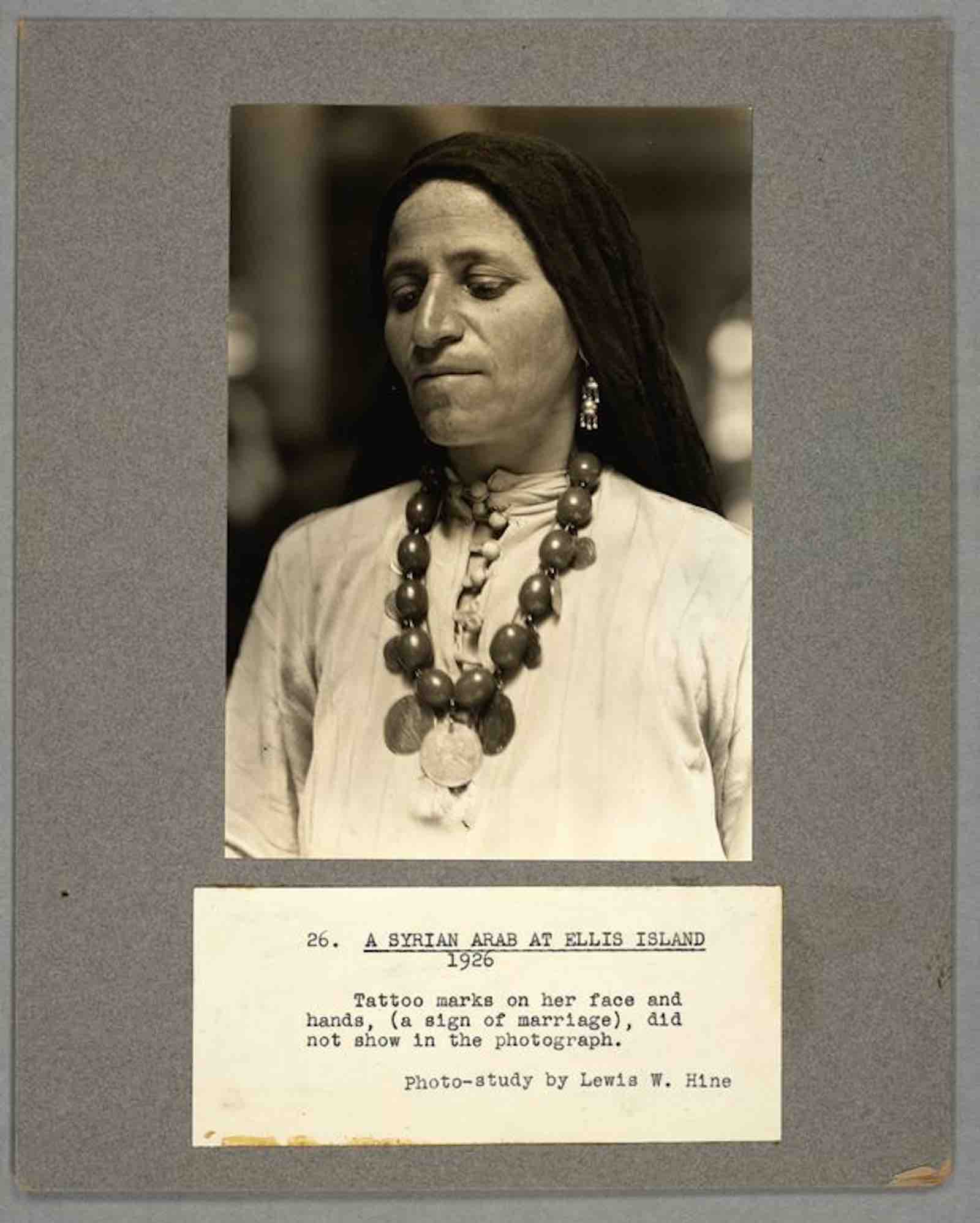
  • Ellis Island Portraits by Augustus F. Sherman, chief clerk at Ellis Island and photojournalist Lewis Hines which are among the earliest visual documentation of MENA immigrants in New York City
  • America’s first English-Arabic dictionary, published in 1896 by Abraham Joseph Arbeely who also founded America’s first Arabic-language newspaper Kawkab Amrika (Star of America), the copy on display inscribed to Andrew Carnegie
  • the first Arab-American novel published, The Book of Khalid by Ameen Rihani, a native of Lebanon and early member of The Pen League which introduced free verse into Arabic poetry
  • ephemera and photographs of Ibrahim Farrah, a performer and scholar of Middle Eastern dance who helped popularize cabaret belly dancing in America
  • Bodega Boys, a photo series by Iranian artist Mahka Eslami

Niyū Yūrk is on display in the Ispahani-Bartos Gallery at The New York Public Library’s Stephen A. Schwarzman Building until March 8, 2026.
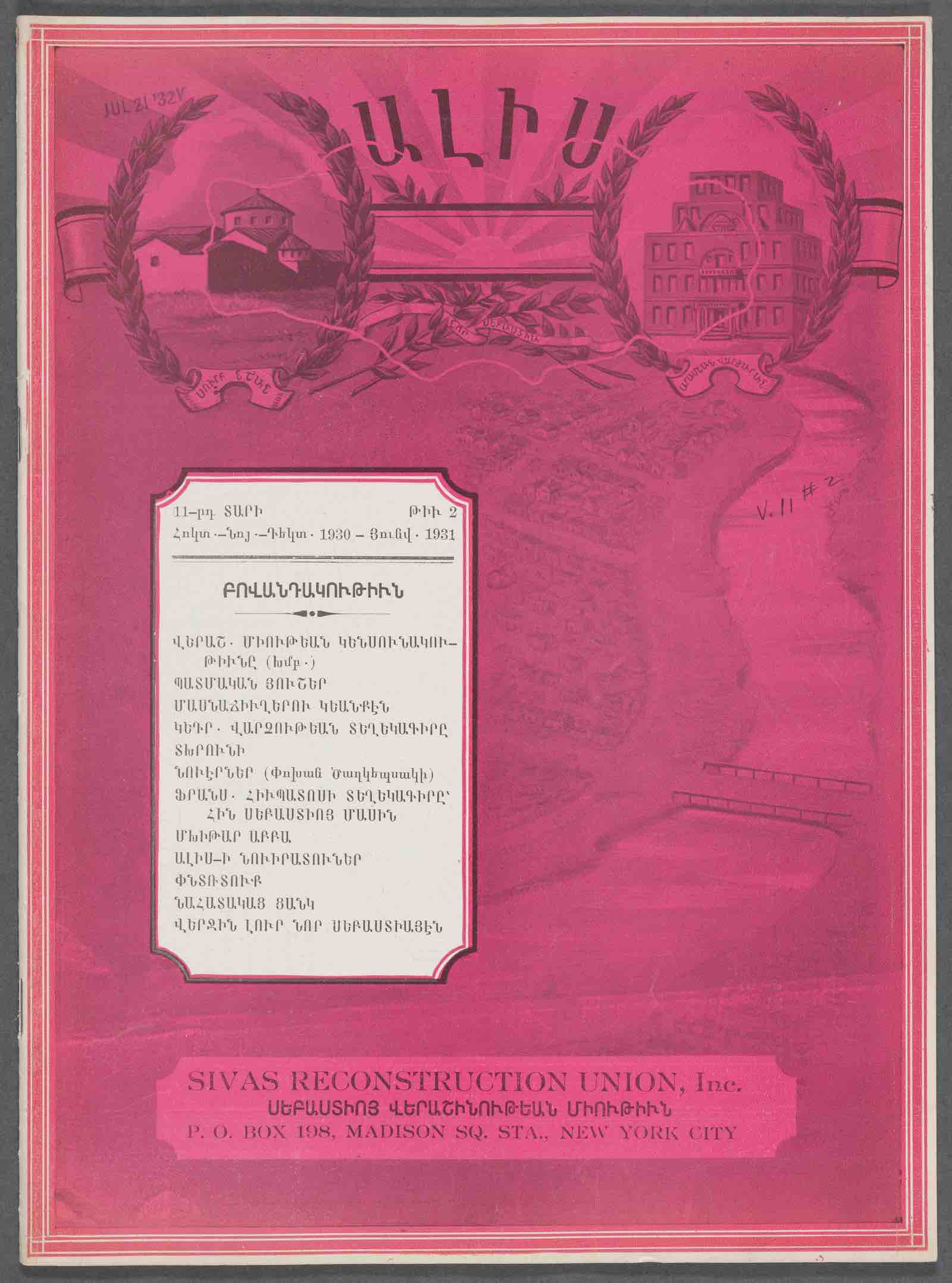
As Armenians established roots in New York, they published daily, weekly, and monthly publications including Alis, founded in New York by survivors of the genocide from the Sepastia region, present-day Sivas, Turkey (Alis, Vol XI, No.2, Oct/Nov/Dec 1930, New York: Sivas Reconstruction Union, Inc)
1/4
New York Public Library

As Armenians established roots in New York, they published daily, weekly, and monthly publications including Alis, founded in New York by survivors of the genocide from the Sepastia region, present-day Sivas, Turkey (Alis, Vol XI, No.2, Oct/Nov/Dec 1930, New York: Sivas Reconstruction Union, Inc)

Lewis Wickes Hine, A Syrian Arab at Ellis Island, 1926. Some of the earliest visual documentation of MENA immigrants in New York City was made at Ellis Island in the early 20th century by Lewis Hine, a pioneering photojournalist. Images were often staged, with names left unrecorded and descriptions frequently inaccurate.
2/4
New York Public Library

Lewis Wickes Hine, A Syrian Arab at Ellis Island, 1926. Some of the earliest visual documentation of MENA immigrants in New York City was made at Ellis Island in the early 20th century by Lewis Hine, a pioneering photojournalist. Images were often staged, with names left unrecorded and descriptions frequently inaccurate.


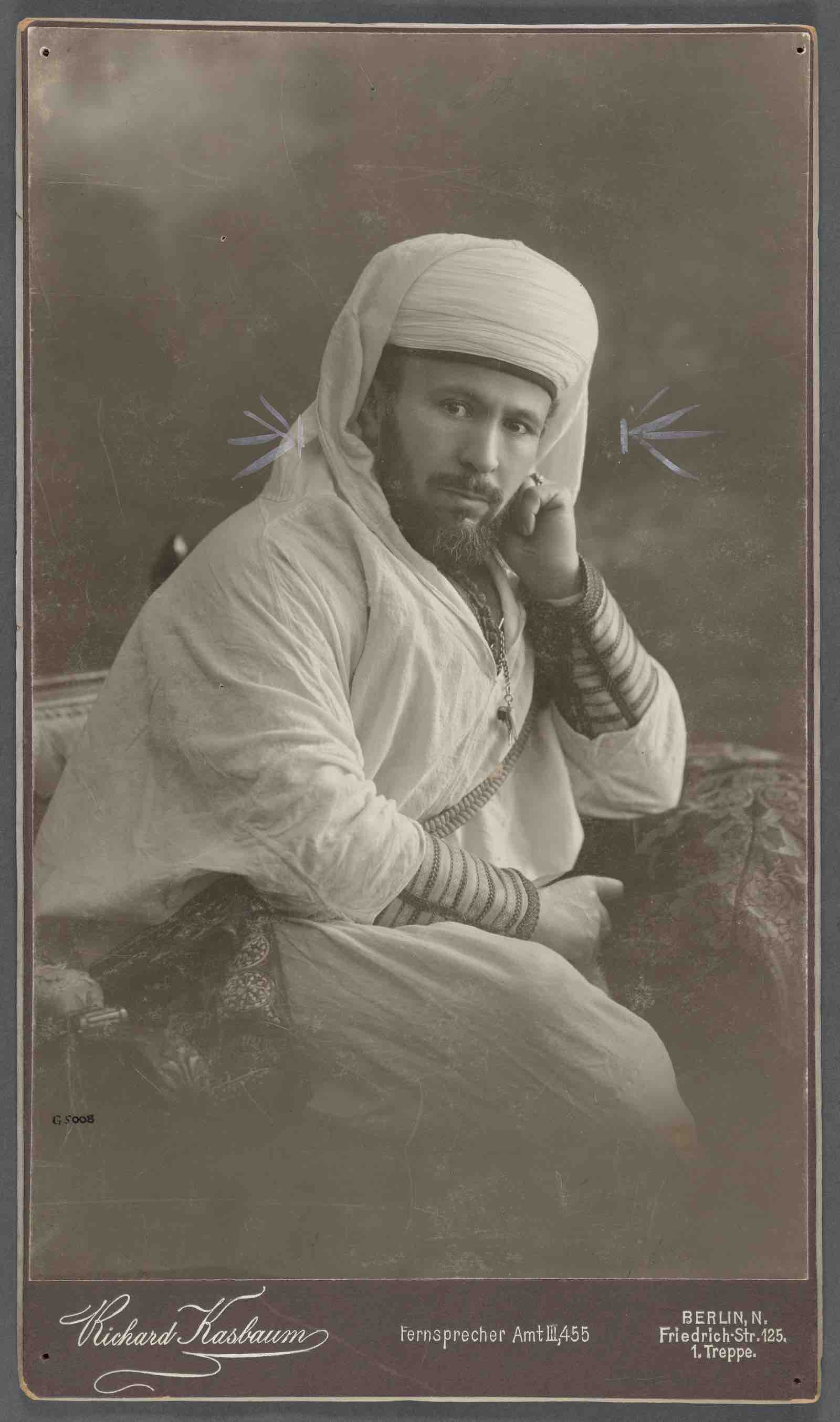
Richard Kasbaum (active 1880s), undated photograph of Sir (Sidi) Hassan Ben Ali (1863–1914), an impresario from the outskirts of Marrakech, Morocco, who toured nationally with his troupe of Moroccan acrobats, dancers, musicians, and actors called the Hassan Ben Ali Arabs Co.
3/4
New York Public Library

Richard Kasbaum (active 1880s), undated photograph of Sir (Sidi) Hassan Ben Ali (1863–1914), an impresario from the outskirts of Marrakech, Morocco, who toured nationally with his troupe of Moroccan acrobats, dancers, musicians, and actors called the Hassan Ben Ali Arabs Co.


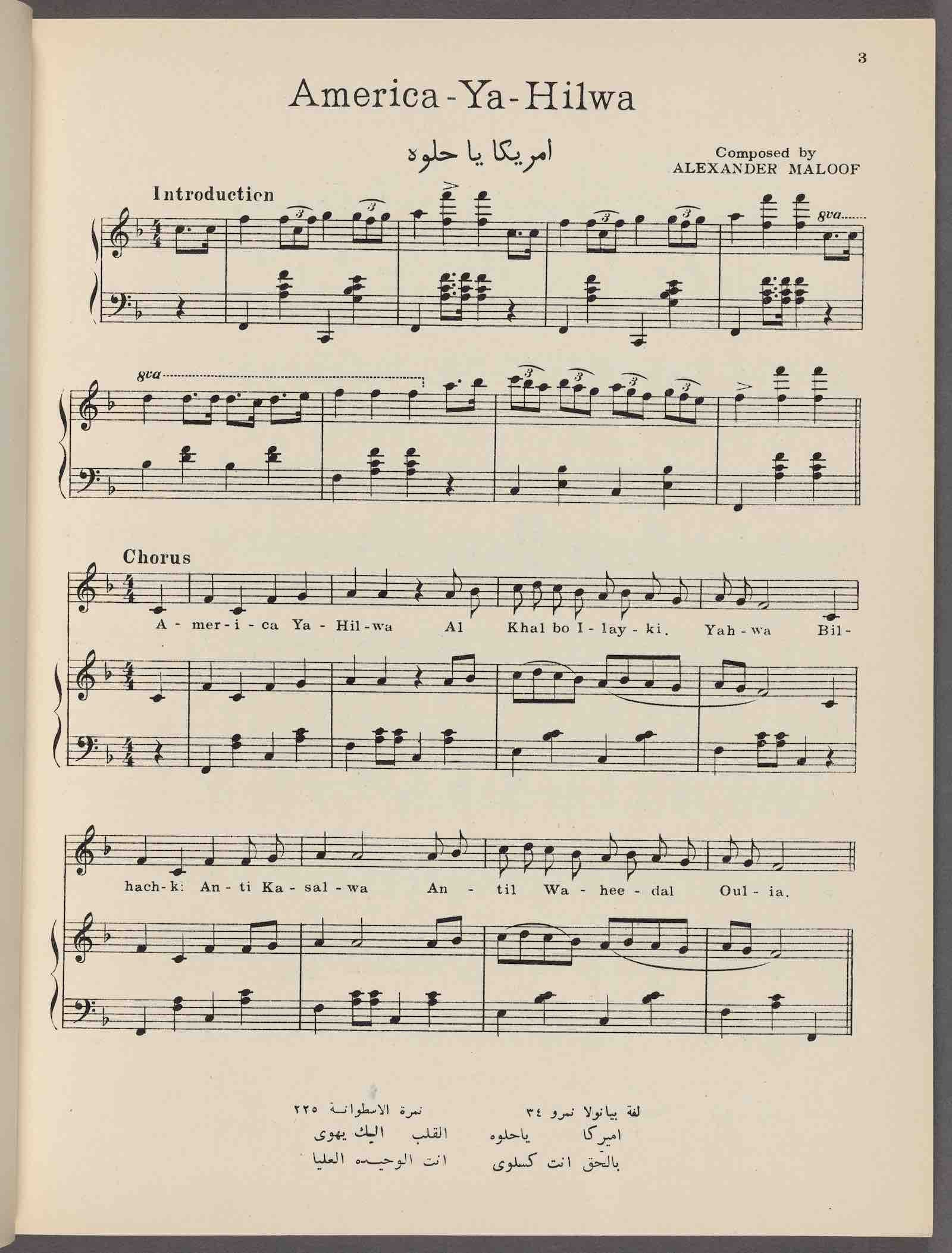
Born in present-day northern Lebanon, Alexander Maloof (Iskandar Maʿlūf, 1884–1956) immigrated with his family to New York City, where he became a composer, arranger, pianist, label owner, and conductor. In 1912, he wrote For Thee, America (Amerika-Ya-Hilwa) and spent years campaigning for it to become the U.S. national anthem (Maloof Phonograph & Music Co., 32 Rector Street, NYC, 1924).
4/4
New York Public Library

Born in present-day northern Lebanon, Alexander Maloof (Iskandar Maʿlūf, 1884–1956) immigrated with his family to New York City, where he became a composer, arranger, pianist, label owner, and conductor. In 1912, he wrote For Thee, America (Amerika-Ya-Hilwa) and spent years campaigning for it to become the U.S. national anthem (Maloof Phonograph & Music Co., 32 Rector Street, NYC, 1924).