Jack Kerouac's Origins Explored In New Grolier Exhibition
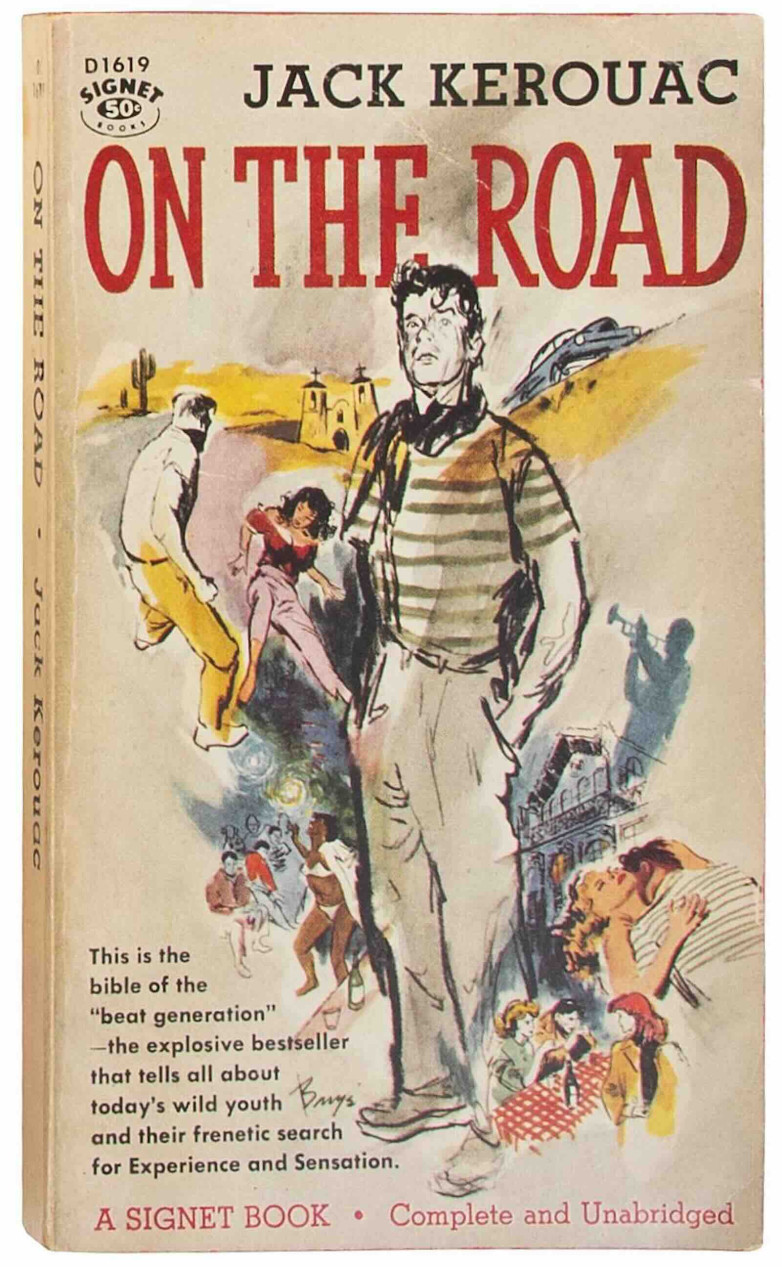
Jack Kerouac, On the Road (New York: Signet, 1958)



Running Through Heaven: Visions of Jack Kerouac will explore the writer’s personal life from childhood to his death through more than 60 items from the collection of Grolier Club member Jacob Loewentheil.
Running March 5 – May 16 at The Grolier Club in New York, the exhibition will feature unpublished letters, unknown and unpublished manuscripts, Jack Kerouac’s copies of books that were important to his evolution as a writer, his own first editions of his best-known works, critical first editions, original drawings, classic and unknown photographs.
Highlights include:
- a self-portrait drawing in pencil from 1956 signed “Jean-Louis Kérouac” a year before the 1957 publication of On The Road
- letters to friends Ed White and Neal Cassady - in a 1950 letter to White, Kerouac writes “All I want to do is live well, love well, and write well,” and i a 1960 letter to Cassady Kerouac signs off with “By God we WILL end up 2 old bums in the alley!”
- a portrait of Kerouac's older brother Gerard, who died young, in a faux jeweled frame which Kerouac carried with him as he moved around the country, and a typed first draft of Visions of Gerard (c. late 1940s) portraying Gerard as a saintly, formative figure
- photographs including a 1930s image of Kerouac at football practice in Lowell, MA, and a 1957 snapshot by Allen Ginsberg of Kerouac holding William S. Burroughs’ cat in Tangiers
- paperback copies of Kerouac books adorned with pulp-style covers and sensational marketing copy, including the 1958 Signet paperback edition of On The Road describing it as “the explosive bestseller that tells all about today’s wild youth and their frenetic search for Experience and Sensation”
“There was a tension between Kerouac’s public and private personae: the hype and the human,” said Loewentheil. “This exhibition shows a more vulnerable, reflective Kerouac, one concerned with friendships, family, and faith. The lives of Kerouac and his circle of friends weren’t myths, but rather messy and very real, unfolding in public. The exhibition offers not just a portrait of a literary icon, but is a chance for meditation on the enduring human desire to connect, to create, and to make sense of a world that rarely stands still. The works on view invite us to consider not just how a writer saw the world, but how he tried, imperfectly and urgently, to live in it.”